

Infant daycare near me: How to choose the best is one of the most important questions parents ask when looking for a safe, nurturing place for their baby. Choosing infant care is not just about convenience or availability. It is about finding a center where your child will be loved, protected, and supported during the earliest stages of growth.
Many parents focus on location or price first, but the best decision comes from looking deeper into teacher experience, safety practices, communication, curriculum, and the overall environment. By avoiding common mistakes, families can feel more confident choosing care that truly supports their infant’s well-being.
1. Not Reviewing Infant Care Daycare Routines Closely

One of the most serious mistakes parents can make is choosing an infant daycare without fully understanding the daily routine. Babies need more than supervision. They need a steady rhythm of feeding, rest, diapering, comfort, and age-appropriate interaction. A well-planned routine helps infants feel secure because they begin to recognize what to expect throughout the day.
When visiting a center, parents should ask how the classroom handles each baby’s individual schedule. Infants do not all nap, eat, or adjust at the same pace, so care should feel responsive rather than overly rigid. A strong infant program will balance structure with flexibility, especially for younger babies who are still developing natural sleep and feeding patterns.
Important routine questions to ask include:
- How are feeding times handled for each infant?
- Are naps based on the baby’s needs or a fixed classroom schedule?
- How often are diapers checked and changed?
- How are fussy or tired babies comforted?
- Are parents updated on bottles, meals, naps, and diaper changes?
- What activities are included for sensory, motor, and emotional development?
The best infant care routines should also include warm teacher interaction. This may include tummy time, music, soft conversation, reading, gentle play, and quiet bonding moments. These simple experiences support early development while helping babies feel safe and connected.
2. Overlooking Childcare for Infants Near Me Quality Factors

When searching for childcare for infants near me, quality should always come before convenience alone. A center may be close to home or work, but parents should also look carefully at the people, environment, safety standards, and daily care practices that shape their baby’s experience. Infant care requires patience, training, attentiveness, and a strong understanding of early development.
A high-quality infant program should provide consistent supervision and responsive care throughout the day. Teachers should understand how to comfort babies, recognize individual needs, and support milestones such as rolling, reaching, sitting, and early communication. Parents should feel that their baby is seen as an individual, not simply part of a classroom routine.
Key quality factors to review include:
- Teacher experience with infants
- Clean and well-organized classrooms
- Safe sleep practices
- Secure check-in and pick-up procedures
- Age-appropriate toys and learning materials
- Clear communication with parents
- A calm, nurturing atmosphere
- Proper licensing and safety compliance
It is also helpful to observe how teachers interact with the babies during a tour. Do they speak gently? Are they attentive to crying or discomfort? Do they hold, comfort, and engage with infants in warm and appropriate ways? These small details often reveal the true quality of care.
Choosing infant childcare should involve more than comparing hours and tuition. Parents should look for a center that combines safety, warmth, structure, and professional care. When these quality factors are present, families can feel more confident that their baby is in a place where comfort, growth, and well-being are treated as daily priorities.
3. Not Understanding Newborn Daycare Environment Expectations
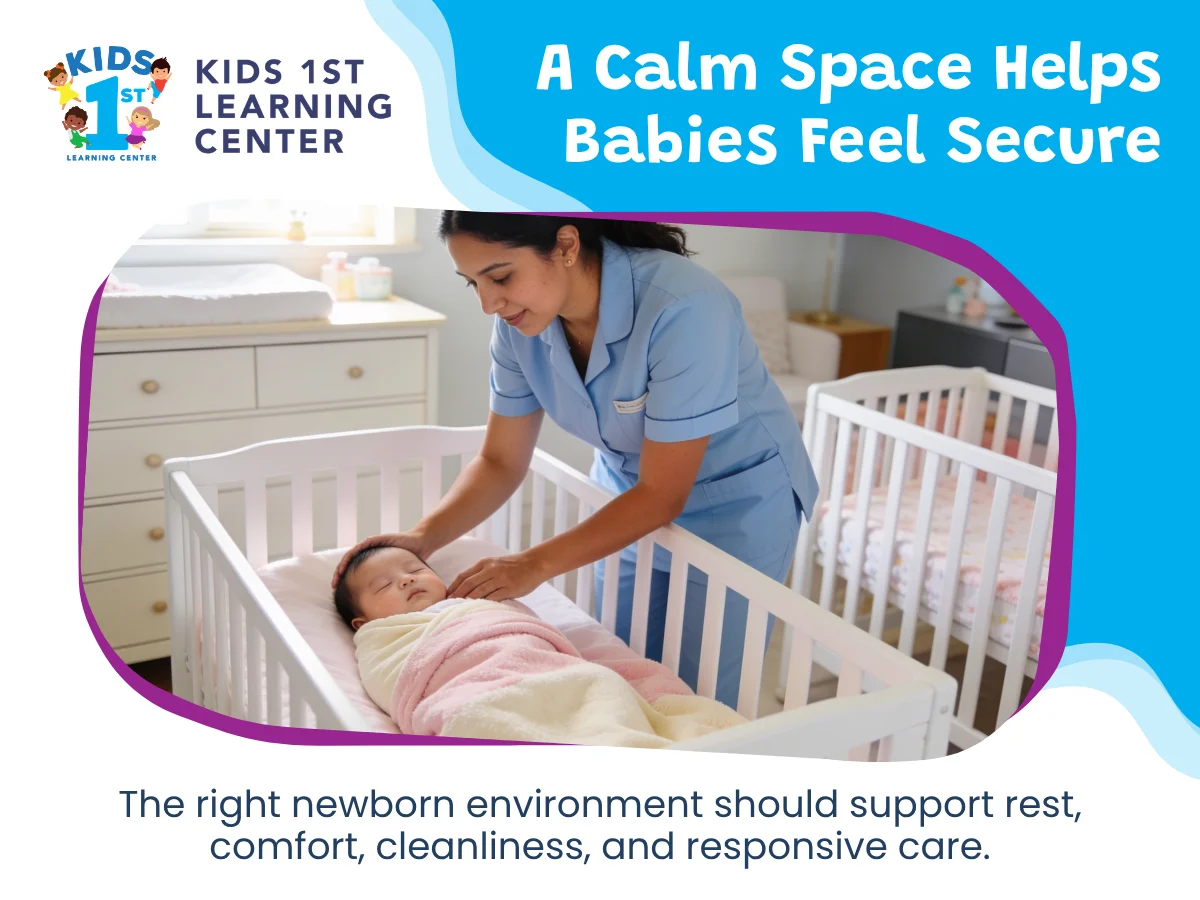
A common mistake parents make is assuming every infant classroom is designed the same way. For newborns, the environment matters deeply. The right setting should feel calm, clean, secure, and emotionally supportive. Since newborns are still adjusting to the world around them, they need a space that limits overstimulation while still encouraging gentle bonding and early development.
Parents should look for an environment that supports both safety and comfort. This includes organized sleeping areas, clean surfaces, safe feeding spaces, and age-appropriate materials. The classroom should not feel chaotic or overcrowded. Instead, it should reflect careful supervision, soothing routines, and teachers who respond quickly to each baby’s needs.
When reviewing newborn daycare environment expectations, parents may want to look for:
- A quiet, nurturing classroom atmosphere
- Safe cribs and clear sleep practices
- Clean feeding and diapering areas
- Soft lighting and limited overstimulation
- Secure entry and pick-up procedures
- Gentle interaction from trained caregivers
- Space for tummy time and early movement
- Clear sanitation practices throughout the day
Beyond the physical space, families should also notice the emotional tone of the room. Babies need caregivers who speak softly, offer comfort, and build trust through consistent attention. A newborn daycare environment should never feel rushed or impersonal.
Choosing the right setting means looking beyond the classroom’s appearance. Parents should ask how the center maintains cleanliness, handles safe sleep, supports bonding, and helps babies feel secure during transitions. A well-prepared newborn environment gives families peace of mind and gives babies a strong foundation for comfort, care, and healthy early growth.
4. Choosing Based on Convenience Alone
Convenience is important when selecting infant care, but it should not be the only deciding factor. Many parents begin their search by looking for the closest center to home or work. While location, hours, and tuition matter, they do not always show whether a program can provide the level of care, attention, and safety an infant needs each day.
A nearby center may seem like the easiest choice, but parents should look deeper before making a decision. Infant care requires a nurturing environment, trained teachers, reliable routines, and strong communication with families. If these elements are missing, convenience may come at the cost of comfort and confidence.
Before choosing a center based mainly on location, parents should consider:
- Whether teachers are experienced with infant care
- How the center handles feeding, naps, and diapering
- Whether classrooms feel calm, clean, and well-supervised
- How staff communicate daily updates with parents
- Whether safety policies are clearly explained
- How babies are comforted during transitions or fussy moments
It is also helpful to compare more than one childcare option. Touring multiple centers gives parents a clearer understanding of what feels right for their child. A slightly longer drive may be worthwhile if the program offers stronger care, better communication, and a more nurturing atmosphere.
The best infant daycare should make daily life easier without compromising quality. Parents should feel confident not only in how close the center is, but also in how carefully their baby will be cared for. Choosing with both practicality and quality in mind can help families find a daycare that truly supports their infant’s needs.
5. Ignoring Communication and Parent Partnership
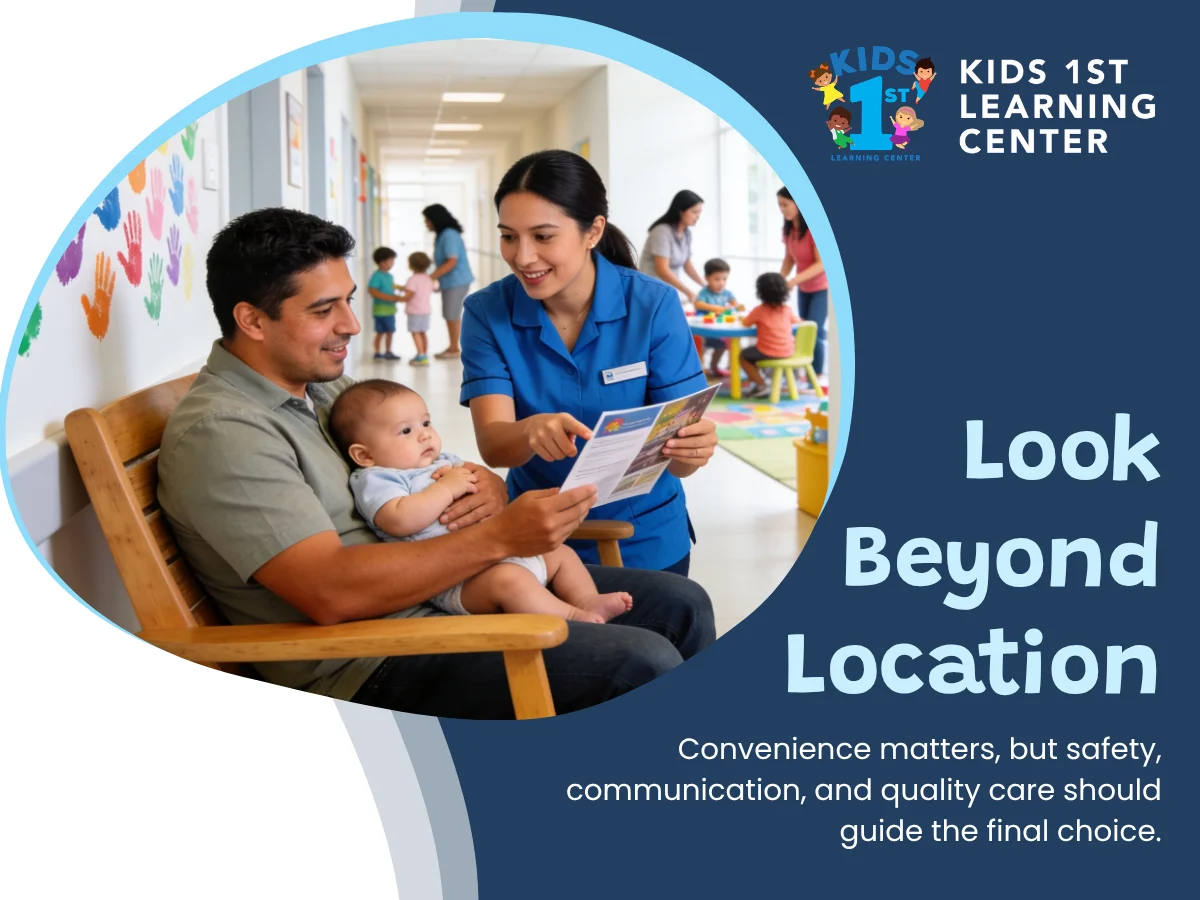
Strong communication is one of the most important factors in choosing an infant daycare. Parents should feel informed, respected, and included in their baby’s care. When a center does not prioritize communication, families may be left wondering how their child ate, slept, adjusted, or responded throughout the day.
Infants cannot explain their needs or experiences, so clear updates from caregivers matter. A dependable daycare should share meaningful information that helps parents understand their baby’s routine, comfort level, and development. This may include feeding details, nap times, diaper changes, mood, activities, and any special notes from the day.
Parents should look for communication practices such as:
- Daily reports with key care details
- Timely updates about changes or concerns
- Open conversations during drop-off and pick-up
- Clear policies for illness, safety, and supplies
- Respect for family preferences when possible
- A welcoming attitude toward parents’ questions
Parent partnership also means the center values what families know about their own child. Caregivers should ask about feeding preferences, sleep habits, comfort routines, sensitivities, and developmental changes. This helps create consistency between home and daycare, which is especially important for infants who are adjusting to new people and surroundings.
A strong daycare relationship should never feel one-sided. Parents should feel comfortable asking questions, sharing concerns, and receiving thoughtful responses. When communication is consistent and respectful, trust grows naturally.
Choosing an infant daycare means choosing a team that will care for your baby alongside you. A center that values parent partnership can provide reassurance, support smoother transitions, and help families feel confident that their child is known, cared for, and supported each day.
Conclusion
Choosing infant daycare is a meaningful decision that deserves time, care, and attention. The right center should offer more than a convenient location. It should provide a safe environment, dependable routines, nurturing teachers, clear communication, and a strong partnership with families. When parents know what mistakes to avoid, they can look beyond surface-level details and focus on what truly matters for their baby’s comfort, development, and well-being.
To learn more about infant care at Kids 1st, contact the team today at (818) 873-0133 or visit https://kids1st.org/contact-kids-1st/.