
Choosing a social-emotional learning preschool in San Fernando, CA, means finding an environment where children get support in understanding feelings, caring for others, and building meaningful relationships. Gratitude and empathy develop gradually through everyday experiences, from recognizing a classmate’s kindness to offering comfort when someone feels upset.
With patient guidance, preschoolers begin to appreciate the people around them and understand that others have their own feelings and needs. Through purposeful play, shared routines, and supportive interactions, early childhood education can nurture these emerging abilities and help children build a strong foundation for friendships, cooperation, and a sense of belonging.
The Role of a San Fernando, CA, Early Learning Center in Building Emotional Awareness
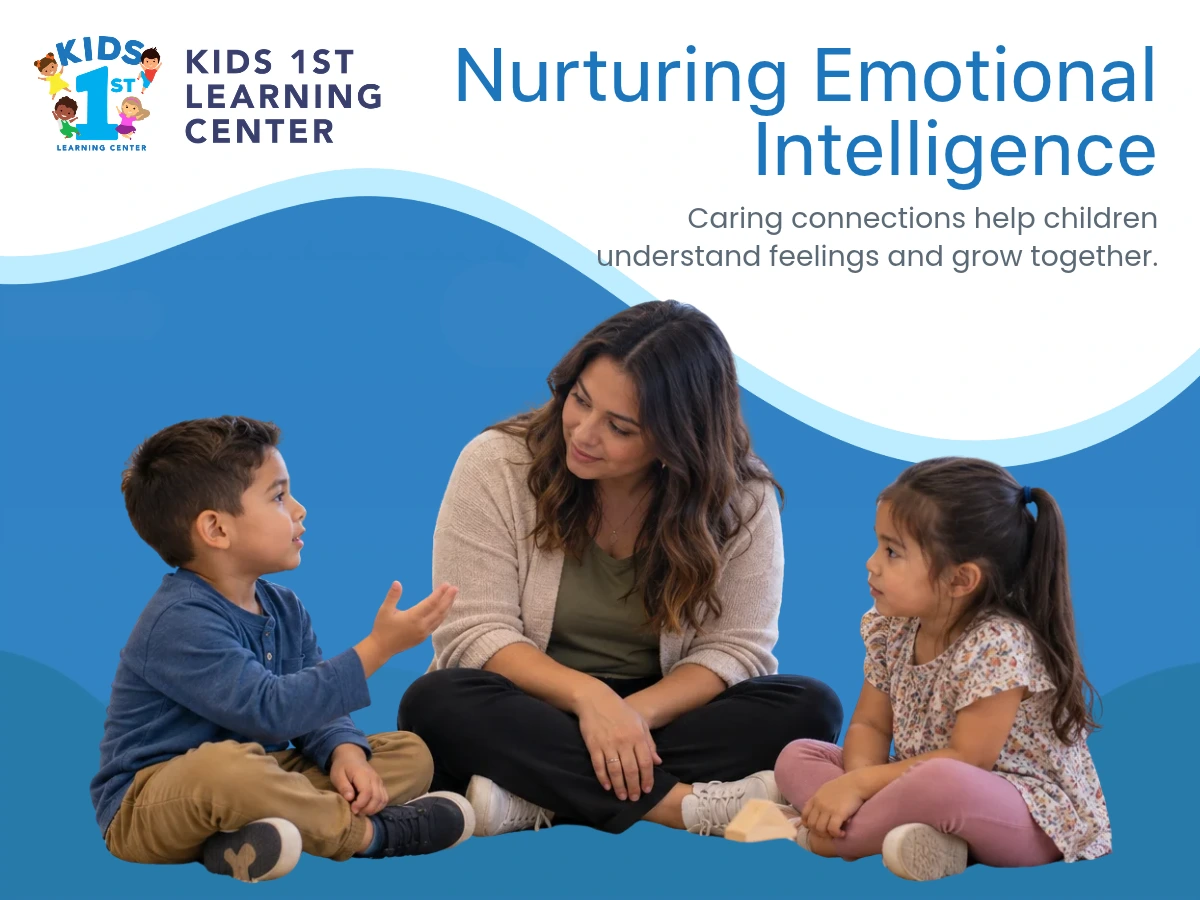
Before children can consider how someone else feels, they need opportunities to understand their own emotions. A San Fernando, CA, early learning center can support this process through attentive relationships and everyday experiences that help children connect feelings with words, situations, and physical sensations.
Emotional awareness develops gradually. A preschooler may recognize happiness readily but need support distinguishing disappointment from anger. The aim is to build understanding while allowing children to experience a full range of feelings.
Connecting Feelings With Everyday Experiences
Ordinary classroom moments offer meaningful opportunities to name emotions. When a block tower falls, an educator might acknowledge, “You worked carefully on that tower, and you look frustrated that it fell.”
This response connects the experience with a possible feeling while leaving room for the child to respond differently. Over time, children can begin using more specific language to describe what they are experiencing.
Making Emotional Expression Accessible
Children do not always have the words to explain their feelings. Supportive learning environments can offer several ways to communicate:
- Picture cards: Children can point to an expression that resembles how they feel.
- Stories and illustrations: Discussing a character’s experiences introduces emotional vocabulary without requiring personal disclosure.
- Drawing and pretend play: Creative activities give children additional ways to explore and express experiences.
These approaches allow participation at different stages of language development, without pressuring children to speak before they are ready.
Recognizing Progress Without Expecting Perfection
Emotional awareness may appear in small moments: a child naming a feeling, asking for comfort, or explaining why an activity feels difficult. Recognizing these efforts reinforces the value of communicating needs.
Consistent, patient responses help children feel understood. This foundation supports the next steps in social-emotional learning, including appreciating kindness and becoming more aware of other people’s perspectives.
Teaching Gratitude in Preschool Through Everyday Acts of Appreciation
Gratitude begins with noticing when someone offers help, makes space at the table, or cares for a shared resource. Teaching gratitude in preschool gives children opportunities to recognize these contributions and gradually understand why they matter. Everyday experiences make appreciation concrete, connecting an abstract idea with something children can see and experience.
Helping Children Notice Care and Effort
Adults can draw attention to thoughtful actions as they occur. After a classmate helps collect spilled crayons, an educator might observe, “Sam helped you gather the crayons so you could finish your picture.”
Specific language shows children what the person did and how it helped. It also broadens appreciation beyond receiving gifts to include time, effort, companionship, and care.
Meaningful opportunities might include:
- During meals: Recognizing the people who prepared and served the food.
- After an activity: Noticing how someone’s help made cleaning up easier.
- While reading: Discussing a helpful action in a story and what it meant to another character.
Offering Different Ways to Express Appreciation
A spoken “thank you” is one way to show gratitude, but children can communicate appreciation in other ways. They might draw a picture for someone who helped them, offer a smile, or describe a kind moment to an adult.
Providing choices makes participation accessible and allows expressions of appreciation to carry personal meaning. Adults can model sincere thanks without requiring children to repeat a phrase immediately or express feelings they do not yet understand.
Making Appreciation Part of the Routine
A brief reflection after a shared activity can help children recall the support they received. An invitation such as “Think about someone who helped you today” provides a clear starting point, with the option to listen rather than respond.
Repeated gently over time, these experiences help children recognize care and express appreciation as their understanding grows.
Supporting Character Development at Daycare in San Fernando Through Empathy
Empathy involves beginning to understand another person’s experience, even when it differs from one’s own. For preschoolers, this understanding is still developing. A child may notice that a classmate is upset without knowing why or how to respond. Supporting character development at daycare in San Fernando means giving children patient guidance as they learn to turn that awareness into considerate actions.
Understanding That Others Have Different Perspectives
Young children often interpret situations through their own preferences. A child who enjoys energetic group games may not understand why another prefers to watch before joining.
Adults can gently introduce another possibility: “You feel ready to play. Maya may want to see how the game works first.” This helps children recognize that people can experience the same situation differently.
Stories and pretend play also provide opportunities to explore perspectives. Asking what a character might need encourages thoughtful consideration while leaving room for more than one answer.
Turning Concern Into Respectful Support
Empathy becomes more meaningful when children have manageable ways to respond. Educators can offer choices that connect concern with action:
- Offer assistance: Ask whether a classmate would like help carrying materials.
- Make room for participation: Invite another child into an activity while accepting their decision.
- Seek adult support: Tell a teacher when someone appears hurt or distressed.
These examples show that caring does not require children to solve another person’s problem alone. Seeking help can be a thoughtful response.
Respecting Boundaries as Part of Kindness
Comfort looks different for each child. One may welcome company, while another needs space. Encouraging children to ask before offering a hug helps them understand that kindness includes respecting another person’s wishes.
Adults can acknowledge considerate choices specifically: “You asked whether she wanted company and listened to her answer.” Through repeated experiences, children can begin connecting empathy with respect, patience, and responsible care for others.
Learning to Cooperate and Resolve Conflicts Through Play
Shared play gives preschoolers opportunities to work toward a common goal while navigating different ideas and preferences. Building a pretend store or creating a road together involves decisions about materials, roles, and space. Disagreements are a natural part of this process. With adult guidance, these moments can become opportunities to practice cooperation and find workable solutions.
Creating Something Together
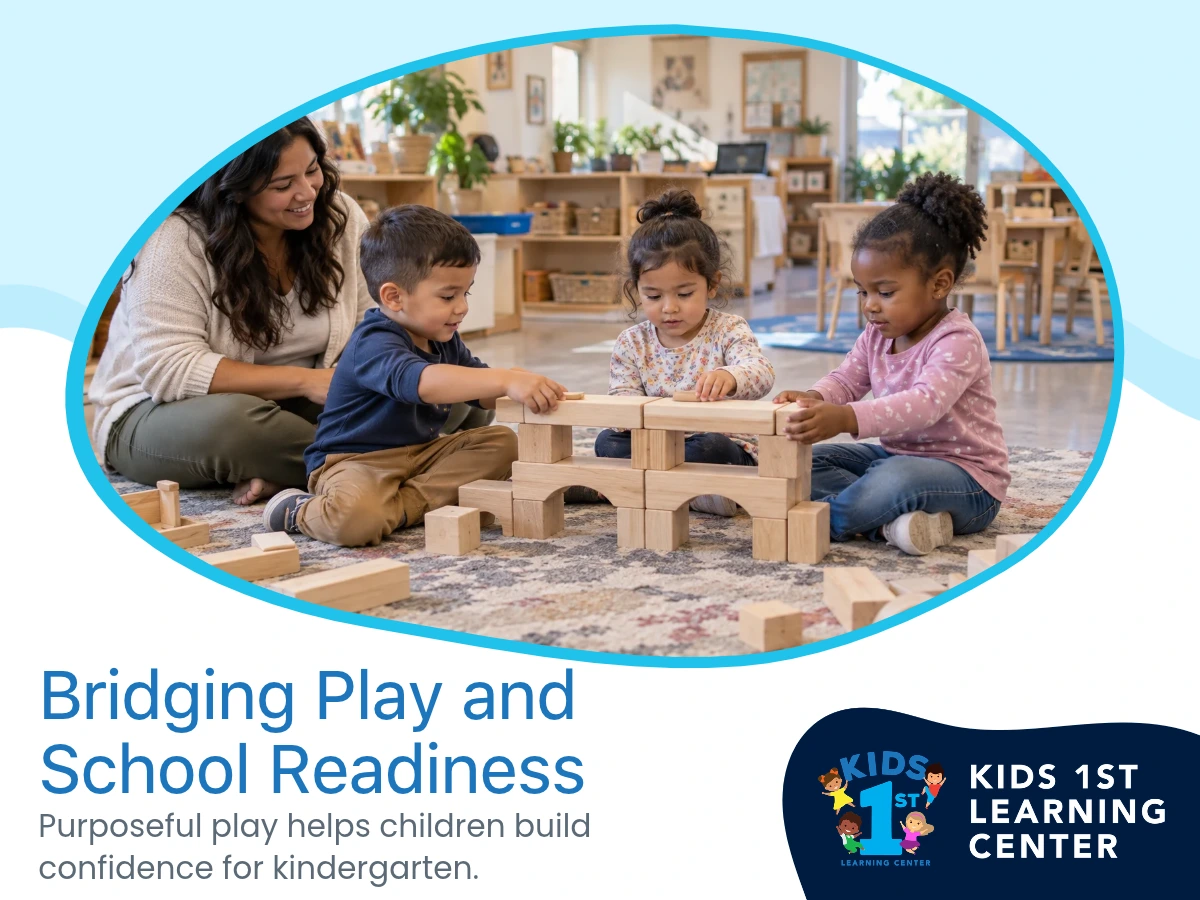
Activities with a shared purpose encourage children to coordinate their efforts. A group building a block neighborhood might decide where the houses belong, connect roads, and adjust plans as new ideas emerge.
Educators can support participation by helping children identify useful roles without assigning all the decisions themselves. One child might gather blocks while another builds, with opportunities to change roles. This gives children experience contributing to a group while retaining some choice over their involvement.
Guiding Children Through a Disagreement
When two children reach for the same toy, they may need help before they can consider a solution. An adult can calmly stop unsafe actions and help each child explain what happened.
A simple sequence makes the process easier to follow:
- State the problem: “You both want to use the same truck.”
- Hear each child: Allow both children to communicate through words, gestures, or adult support.
- Explore possible solutions: Consider taking turns, finding another vehicle, or using the truck together.
- Try and review: Help children test their choice and adjust it if needed.
Allowing Time for Practice
Cooperation rarely develops through a single successful exchange. Children need repeated opportunities, and a solution that works one day may require more support the next.
Adults can recognize specific progress, such as explaining an idea or agreeing on a role. Gradually, these supported experiences give children practical ways to participate in shared play, manage disagreements, and maintain positive relationships.
Conclusion
A strong social-emotional foundation takes shape through small, meaningful experiences: recognizing a feeling, noticing someone’s effort, respecting a classmate’s wishes, or finding a way to play together after a disagreement. Gratitude and empathy grow through these repeated opportunities, supported by adults who offer patience and model consideration. Progress will look different for every child. With time and encouragement, preschoolers can become more confident expressing their needs while learning that their choices matter to the people around them.
To explore your child’s next steps with Kids 1st in San Fernando, call (818) 654-4070 or connect through https://kids1st.org/contact-kids-1st/.