
Infant care in Pacoima reassures working families that their baby is supported in a safe, nurturing, and developmentally appropriate environment throughout the day. During the first year of life, consistent care, responsive interactions, and dependable routines help infants feel secure while supporting healthy growth and early development.
For parents balancing work and family responsibilities, choosing the right infant care program is an important decision. A high-quality program should provide attentive caregivers, age-appropriate learning experiences, and a welcoming environment that supports each infant’s individual needs, routines, and developmental milestones.
What Families Should Look for in Pacoima Infant Daycare
Choosing the right Pacoima infant daycare involves more than finding a convenient location. Families should look for a setting where infants receive attentive care, predictable routines, and developmentally appropriate experiences that support their growth during an important stage of life.
Responsive and Consistent Care
Infants depend on caregivers to recognize and respond to their individual cues. Caregivers should handle feeding, diapering, comforting, rest, and play with patience and consistency. Responsive care helps infants develop a sense of security and gives caregivers opportunities to build strong, trusting relationships with each child.
Families may want to ask how caregivers:
- Follow individual feeding and sleep routines
- Comfort infants when they are tired or unsettled
- Communicate daily updates with parents
- Support each baby’s changing developmental needs
A Safe and Developmentally Appropriate Environment
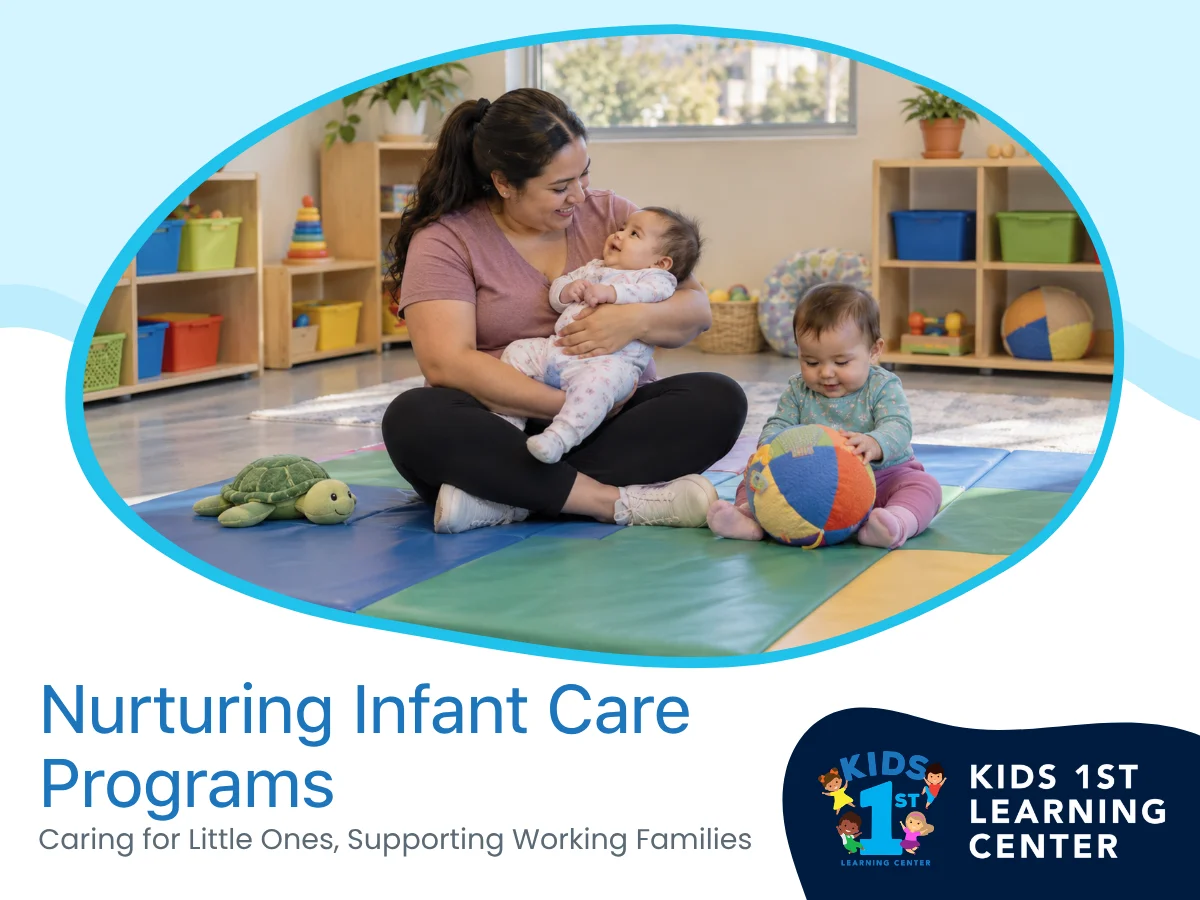
A quality infant classroom should be designed specifically for babies, not simply adapted from a space intended for older children. Clean floor-play areas, safe equipment, age-appropriate materials, and careful supervision all contribute to an environment where infants can explore comfortably.
Safety practices should also be clear and consistent, including procedures related to sanitation, secure entry, safe sleep, feeding, and illness prevention.
Opportunities for Early Learning
Infant care should support development through everyday interactions and purposeful activities. Babies learn through movement, sound, touch, facial expressions, and responsive communication.
Experiences such as tummy time, songs, stories, sensory exploration, and supervised movement can help strengthen physical, language, cognitive, and social-emotional development. These activities should remain flexible and responsive to each infant’s readiness rather than following a rigid schedule.
For working families, dependable infant care can provide valuable continuity between home and the childcare setting. The strongest programs combine safety, nurturing relationships, thoughtful routines, and open communication to support both infants and their families.
How Baby Care Programs in Pacoima Support Early Development
High-quality baby care programs in Pacoima can play an important role in supporting development during the earliest stages of life. Infants experience rapid physical, cognitive, language, and social-emotional growth, and a nurturing childcare environment can provide meaningful opportunities to strengthen these areas through everyday interactions.
Supporting Physical Growth Through Movement
Infants need regular opportunities to move, stretch, reach, roll, and safely explore their surroundings. Age-appropriate activities such as tummy time, supervised floor play, and reaching for toys can help build strength, coordination, and motor skills.
Caregivers can support this development by providing:
- Safe spaces for movement and exploration
- Toys that encourage grasping, reaching, and tracking
- Supervised activities that reflect each baby’s developmental stage
These experiences allow infants to build physical confidence at their own pace.
Encouraging Early Language and Cognitive Skills
Even before babies begin speaking, they are constantly learning from the sounds, expressions, and interactions around them. Talking, singing, reading aloud, and responding to babbling can help support early communication and language development.
Simple experiences such as looking at picture books, listening to songs, and exploring different textures can also encourage curiosity, attention, and early problem-solving skills.
Building Social and Emotional Security
Strong relationships with consistent caregivers are especially important during infancy. When caregivers respond calmly and attentively to an infant’s needs, babies begin to develop trust and a sense of security.
Daily moments such as feeding, comforting, diaper changes, and play can become valuable opportunities for connection. Warm eye contact, gentle communication, and predictable routines help infants feel safe while gradually becoming more comfortable exploring their environment.
For families, choosing a program that supports the whole child means looking beyond basic supervision. Thoughtful infant care combines responsive relationships, purposeful play, and developmentally appropriate experiences to help babies build a strong foundation for future learning and growth.
Why Trusted Infant Care in Pacoima Matters for Working Families
For working parents, choosing trusted infant care in Pacoima can make a meaningful difference in how confidently they manage the demands of work and family life. Reliable care provides more than supervision. It reassures families that their baby is spending the day in a safe, nurturing environment with caregivers who understand infants’ needs.
Creating Consistency Between Home and Care
Infants benefit from familiar routines and responsive care. When caregivers take time to understand a baby’s feeding schedule, sleep patterns, comfort needs, and emerging preferences, the transition between home and childcare can feel more consistent.
Clear communication also helps parents stay informed about important parts of the day, such as:
- Feeding and bottle times
- Naps and rest periods
- Diaper changes
- Mood and behavior
- Developmental observations and milestones
This shared information can help families maintain routines and respond to their baby’s changing needs.
Supporting Parents During the Workday
Returning to work after welcoming a baby can bring practical and emotional adjustments. Dependable infant care lets parents focus on their responsibilities while knowing their child is receiving attentive support.
A trusted program should maintain clear policies, dependable schedules, strong health and safety practices, and regular communication with families. These elements help create stability for parents whose daily schedules depend on reliable childcare.
Building a Strong Family and Caregiver Partnership
The relationship between families and caregivers is especially important during infancy. Parents should feel comfortable sharing information, asking questions, and discussing changes in their baby’s routine or development.
When caregivers and families communicate openly and work toward the same goals, infants benefit from greater continuity and individualized support. For working families in Pacoima, a dependable infant care program can become an important extension of the support system surrounding their child during these formative early months.
Daily Experiences That Help Infants Learn and Grow
Infants learn through repeated interactions, movement, sensory exploration, and the care they receive throughout the day. In a thoughtfully planned infant program, even simple routines can become meaningful opportunities to support development. The goal is not to rush babies toward milestones, but to provide safe, engaging experiences that match their individual stage of growth.
Learning Through Movement and Exploration
Physical development begins with opportunities to move freely and safely. Supervised tummy time, reaching for toys, rolling, crawling, and supported sitting can help infants strengthen important muscles and improve coordination.
Caregivers can encourage development by providing:
- Soft, open areas for floor play
- Age-appropriate toys that encourage reaching and grasping
- Safe opportunities to explore movement
- Activities adapted to each infant’s abilities and readiness
These experiences support gross and fine motor development while allowing babies to explore their surroundings at a comfortable pace.
Building Language Through Everyday Interaction
Language development starts long before a child says their first word. Infants benefit from hearing caregivers speak, sing, read, and respond to their sounds throughout the day.
Naming objects, describing simple actions, sharing picture books, and responding to babbling can help babies connect sounds, expressions, and meaning. Consistent communication also helps strengthen early social awareness and connection.
Supporting Growth Through Daily Routines
Feeding, diapering, resting, and transitions are important parts of infant care, but they can also provide valuable opportunities for learning and relationship building. Gentle conversation, eye contact, and consistent responses help infants feel secure and understood.
Predictable routines can also help babies become familiar with the rhythm of their day. When care is calm, responsive, and individualized, infants can better focus on exploring, interacting, and developing new skills.
Together, these daily experiences support physical, cognitive, language, and social-emotional development while creating a strong foundation for future learning.
Conclusion
Choosing infant care is an important decision for any family, especially when parents are balancing work, home responsibilities, and the needs of a growing baby. The right program should provide a safe and nurturing environment where infants receive responsive care, consistent routines, and meaningful opportunities to explore and develop at their own pace.
For families in Pacoima, trusted infant care can offer valuable continuity during these early months while supporting physical, cognitive, language, and social-emotional development. When caregivers and families communicate openly and work together, babies benefit from a more consistent and supportive experience each day.
Ready to learn more about infant care options for your family? Contact Kids 1st through the contact page or call (818) 873-0133 to get started.