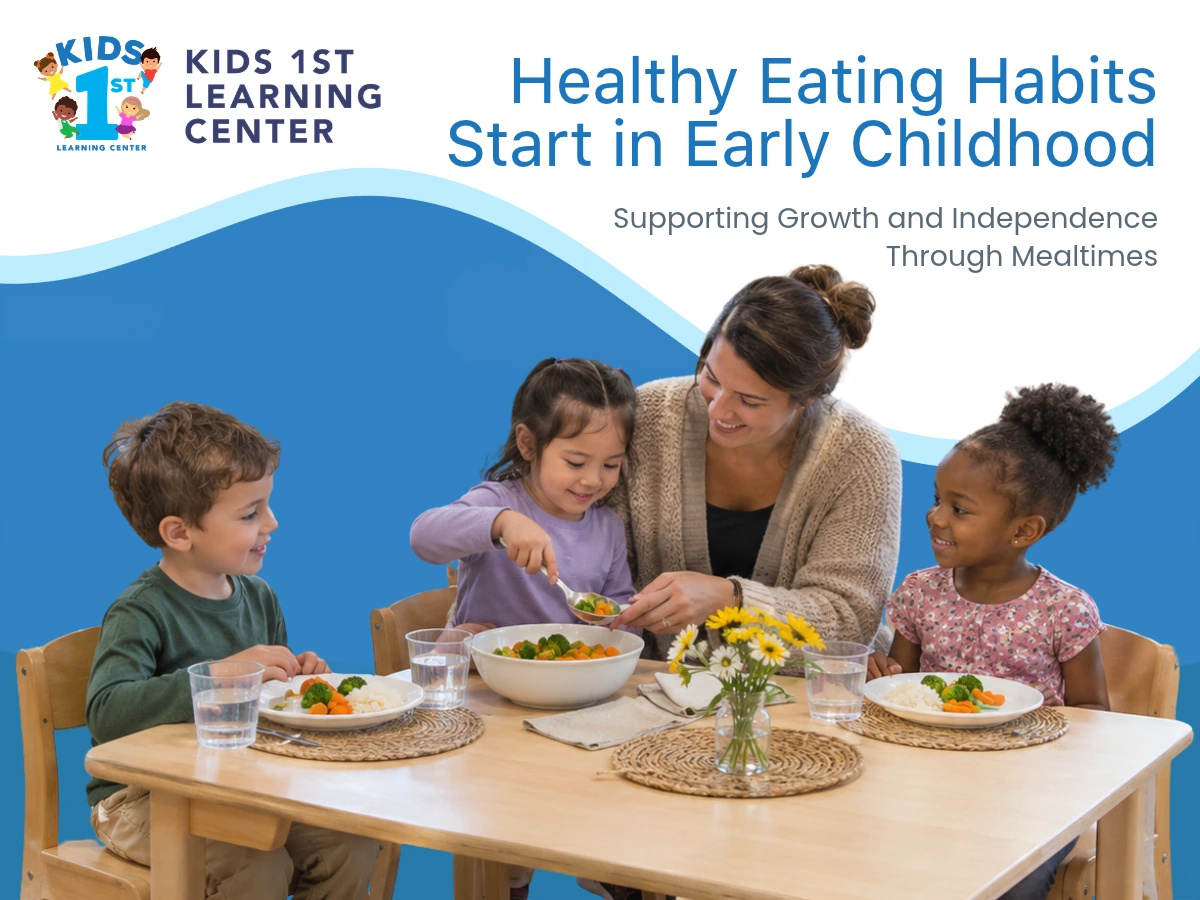

Choosing daycare meal programs in Pacoima, CA, involves considering both the food children receive and the experiences surrounding each meal. Thoughtful nutrition planning, predictable routines, and supportive guidance can help young children feel comfortable at the table while building everyday skills. Family-style dining, where children participate in serving food with adult assistance, offers additional opportunities for independence and connection.
For parents, understanding these elements can make it easier to evaluate a childcare program’s approach to mealtimes. A positive foundation begins with nourishing food, appropriate expectations, and an environment that respects each child’s developing abilities, preferences, and signs of hunger and fullness.
What to Look for in a Pacoima Child Care Center’s Meal Program
A meal program is an important part of the care children receive throughout the day. When evaluating a Pacoima child care center, parents can look beyond whether food is provided to understand how meals are planned, served, and adapted to individual needs.
Kids 1st’s Pacoima location describes balanced meals and snacks as part of its approach to supporting children’s growth and learning. This provides a starting point for a more detailed conversation about the center’s current menu and mealtime arrangements.
Looking Beyond a Single Sample Meal
A menu covering several days gives families a clearer picture than one lunch example. It shows how ingredients and dishes vary and helps parents identify foods their child already knows, as well as those that may be unfamiliar.
Useful questions include:
- Daily provision: Which meals and snacks are included during the child’s attendance hours?
- Menu communication: How can families view menus and learn about substitutions?
- Food preparation: How are textures and serving sizes adapted for different ages and abilities?
- Individual needs: What arrangements are available for allergies, dietary restrictions, or feeding support?
These questions help families understand what their child’s day may involve without assuming that every program follows the same practices.
Making Individual Needs Part of the Conversation
Before enrollment, parents should explain any diagnosed allergies, relevant care instructions, and cultural or religious food requirements. Asking how staff record and communicate this information helps clarify responsibilities.
Families can also describe their child’s experience with utensils, familiar foods, and any assistance they need at the table. These practical details provide a fuller picture than labeling a child a “good” or “difficult” eater.
The goal is a clear, shared understanding of how the program can support the child. A thoughtful discussion gives parents information they can use to assess whether the arrangements suit their family.
Supporting Healthy Nutrition in Early Childhood Without Mealtime Pressure
Healthy nutrition in early childhood includes access to varied, nourishing foods and opportunities to become comfortable with eating them. Children bring different appetites, preferences, and experiences to the table. A supportive approach makes room for these differences while maintaining appropriate adult guidance.
Balancing Adult Guidance With Children’s Cues
Responsive feeding gives adults and children complementary roles. Adults provide suitable food and a supportive eating environment, while children communicate whether they are hungry, which foods they wish to eat, and when they have had enough.
Head Start guidance emphasizes responding to hunger and fullness cues rather than requiring children to finish everything served. This approach balances structure and flexibility. A predictable meal can still accommodate different appetites.
Giving Unfamiliar Foods Time to Become Familiar
An unfamiliar appearance, smell, or texture can make a child hesitant. Offering a food again another time, perhaps alongside something familiar, gives the child another chance to explore it without making acceptance a test.
Adults can use neutral descriptions such as “These carrots are soft” or “This rice has a different texture.” The conversation can invite curiosity without requiring a taste.
A supportive response might include:
- Offering encouragement without repeated demands.
- Accepting that a child may decline an offered food.
- Avoiding comparisons with how much another child eats.
- Keeping conversation pleasant rather than focused on bites taken.
Looking Beyond One Meal
One unfinished lunch offers limited information about a child’s overall eating experience. Parents and educators can share observations across several days, noting what was offered and how the child responded.
This communication keeps attention on useful patterns rather than isolated moments. If a child’s eating raises ongoing concerns, families can seek individualized advice from their healthcare professional. Everyday encouragement should remain patient, consistent, and appropriate to the child.
Creating Predictable Preschool Meal Routines in Pacoima, CA
Well-planned preschool meal routines in Pacoima, CA, can help children understand the rhythm of their day. A familiar sequence provides clear expectations about moving from play to eating and then returning to other activities.
Predictability does not require every child to eat at the same pace. It means offering a dependable framework with enough time and assistance for children to participate comfortably.
Preparing for a Calm Transition
An abrupt end to an absorbing activity can make the move to lunch difficult. A brief advance reminder gives children time to finish a task or prepare to leave it.
A possible sequence might include putting materials away, washing hands, and finding a place at the table. Educators can introduce each step gradually and provide reminders as needed.
Small responsibilities can also give children a meaningful role. Depending on their abilities, they might place napkins at seats or help count the cups needed. These tasks make preparation part of the learning experience.
Allowing Enough Time to Eat
The meal itself deserves an unhurried place in the schedule. Children may need time to manage utensils, ask for help, or join the conversation.
Head Start identifies meals and snacks as opportunities for communication and learning, with sufficient time to eat and without using food as a reward or punishment. These principles offer useful considerations when families review a program’s routines.
Ending the Meal With Clear Expectations
A consistent ending helps children understand what happens next. They might place a cup in a designated area, dispose of a napkin, or wait for help before leaving the table.
Expectations should reflect each child’s abilities. A child who needs assistance can still participate in a small part of the process.
From preparation to cleanup, the value lies in repeated practice. Familiar routines give children opportunities to build skills while receiving support where they need it.
How Family-Style Dining Builds Independence and Connection
Family-style dining generally involves children serving themselves from shared dishes with assistance from supervising adults. This planned, supported approach gives children an active role in the meal.
The USDA provides resources specifically designed to help childcare programs introduce this form of meal service. Use it in ways that reflect children’s developmental abilities and the program’s food-service arrangements.
Practicing Useful Physical Skills
Scooping food, passing a bowl, and pouring from a manageable pitcher give children opportunities to coordinate their movements. Child-sized serving tools can make these tasks more accessible.
Adults should stay close to steady containers, demonstrate movements, and assist children who are not ready to serve independently. Address spills calmly as part of learning.
Participation can develop gradually. A child may begin by helping with one manageable task rather than serving every part of the meal. Institute of Child Nutrition guidance highlights suitable utensils, hygiene, and practice with passing, pouring, and scooping as useful preparation.
Learning to Participate in a Shared Meal
A shared table creates natural reasons to communicate. Children can ask for a serving dish, wait while someone else uses it, or ask for help when something is out of reach.
These exchanges make social skills practical. Adults can model respectful requests and include quieter children without requiring everyone to speak.
Family-style meals can also support independence by allowing children to take an active role in serving themselves. The Institute of Child Nutrition identifies motor skills, social interaction, and confidence as benefits of this approach.
Asking How the Approach Works in Practice
Families interested in family-style dining should ask whether it is offered, which age groups participate, and how staff provide assistance. It is also helpful to discuss how individual dietary needs are managed around shared serving dishes.
The most meaningful consideration is how comfortably and safely children can participate. Independence grows through suitable opportunities and attentive support.
Conclusion
A nourishing childcare experience brings together thoughtful food choices, dependable routines, and respectful guidance. Over time, ordinary moments at the table can help children become more comfortable with unfamiliar foods, communicate their needs, and take part in shared responsibilities. Family-style dining can create opportunities to practice these skills when appropriate and supported. For parents, understanding both the menu and the mealtime experience offers a fuller picture of a program’s approach to care.
Discuss your child’s mealtime needs with Kids 1st’s Pacoima team at (818) 873-0133 or send an inquiry through https://kids1st.org/contact-kids-1st/.