
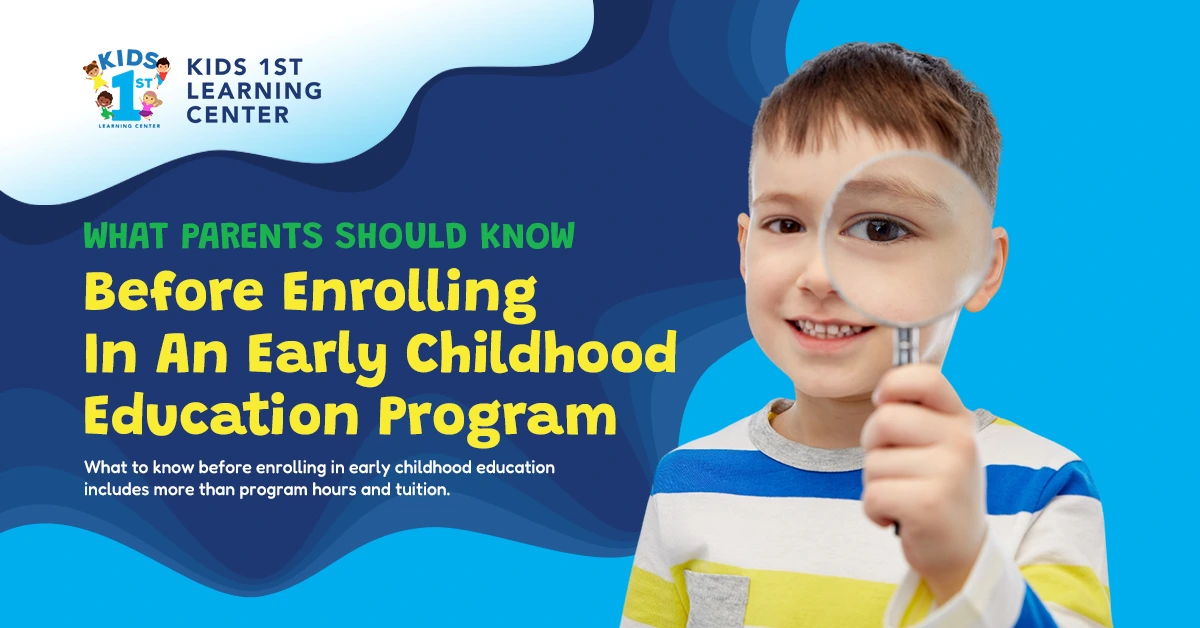
What to know before enrolling in early childhood education includes more than program hours and tuition. It also means understanding how a center supports your child’s safety, development, and daily care. Before you commit, it is important to review teacher qualifications, classroom routines, health and illness policies, and the program’s communication with families.
You can also learn a great deal by touring the classrooms, observing teacher-child interactions, and asking clear questions about curriculum and behavior support. With the right information, parents can make a confident decision and choose a program that fits their family’s needs and goals.
Early Childhood Education Enrollment Requirements To Review First

Most early childhood programs will request documentation supporting safe care, accurate records, and emergency planning. Having these items ready can prevent enrollment delays and make the first day feel more organized.
Common enrollment documents include:
- Child’s birth certificate or other proof of age
- Immunization records and required health forms
- Emergency contacts and authorized pick-up list
- Parent or guardian identification
- Medical notes for allergies, chronic conditions, or accommodations
Health And Safety Requirements
Enrollment often depends on meeting basic health and wellness standards that protect all children in care. Review the center’s illness policy carefully, including when a child must stay home and when they may return. If medication is needed, ask what forms and approvals are required and how medication is stored and administered.
Items to confirm before your start date:
- Illness exclusion guidelines and return-to-care rules
- Allergy action plans and food restrictions
- Medication authorization procedures
- Required physical exams or wellness checks, if applicable
Program Policies And Family Agreements
Most programs require families to sign policy acknowledgments to ensure consistent expectations. These typically cover daily procedures, behavior guidance, and communication. Read these carefully so there are no surprises after your child begins.
Policies often include:
- Drop-off and pick-up procedures and late pick-up fees
- Attendance expectations and holiday closures
- Guidance approach and how behavior concerns are addressed
- Photo permissions and parent communication methods
Tuition, Fees, And Assistance Eligibility
Before enrolling, make sure you understand the full cost structure and what is included. Some programs have registration fees, supply fees, or deposits in addition to weekly or monthly tuition. If financial assistance or subsidies are available, ask what eligibility documentation is required and how the process works.
Quick checklist for budgeting:
- Registration fee, deposit, and tuition schedule
- Payment methods and due dates
- Refund and withdrawal policies
- Documentation needed for assistance programs
Reviewing early childhood education enrollment requirements early helps you plan with confidence and ensures your child starts in a setting that is prepared to support them from day one.
Questions To Ask Before Enrolling In Childcare
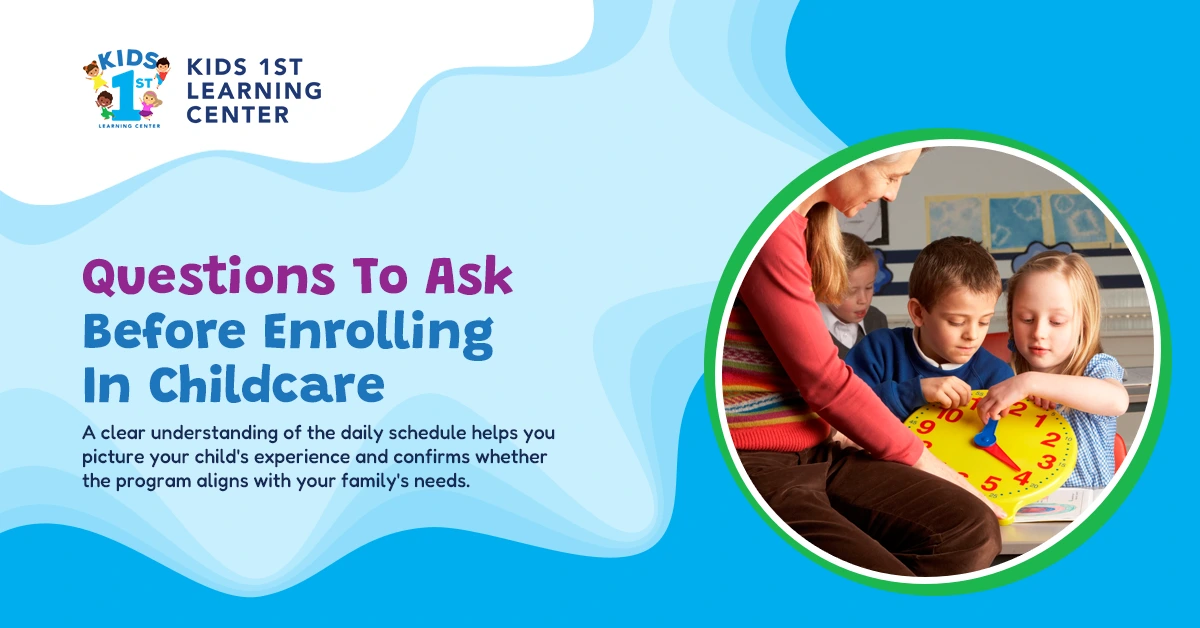
A clear understanding of the daily schedule helps you picture your child’s experience and confirms whether the program aligns with your family’s needs. Ask how the day is structured and how teachers support children through transitions like drop-off, meals, and rest time.
Ask about routines such as:
- What does a typical day look like for my child’s age group?
- How are meals, snacks, and nap times handled?
- How do you support children during separation at drop-off?
- How are diapers, toileting, and hygiene routines managed?
Questions About Curriculum And Development
The best programs can explain how their learning approach supports real developmental goals. Ask what children are learning through daily activities and how the program adapts for different skill levels.
Ask about learning and growth:
- What curriculum or framework guides your program?
- How do you support language, early literacy, and social-emotional development?
- How do teachers individualize support for different learning needs?
- How do you share progress updates with families?
Questions About Teachers, Ratios, And Consistency
Teacher consistency is a key factor in a child’s comfort and long-term progress. Ask about staffing practices and classroom ratios to understand the level of attention your child can expect each day.
Ask about staffing:
- What are your child-to-teacher ratios and group sizes?
- What training and qualifications do teachers have?
- How do you handle staff absences and substitute coverage?
- What is your approach to behavior guidance and conflict resolution?
Questions About Safety, Health, And Policies
Policies should be easy to access and clearly explained. Reviewing these details before enrolling can help you feel confident and avoid misunderstandings later.
Ask about safety and wellness:
- How is the building secured, and who is allowed to pick up my child?
- What is your illness policy, and when can children return after being sick?
- How do you manage allergies and medication administration?
- What emergency procedures do you practice and document?
Questions That Reveal The Center’s Culture
Sometimes the most helpful answers come from questions that show how a center thinks about children and families.
Culture-focused questions:
- How do you partner with parents when concerns come up?
- What does successful communication look like in your program?
- What do families say they value most about your center?
These questions to ask before enrolling in childcare can help you compare programs with clarity and choose a setting that supports your child’s daily needs and long-term development.
Signs Of Early Childhood Program Readiness For Your Child
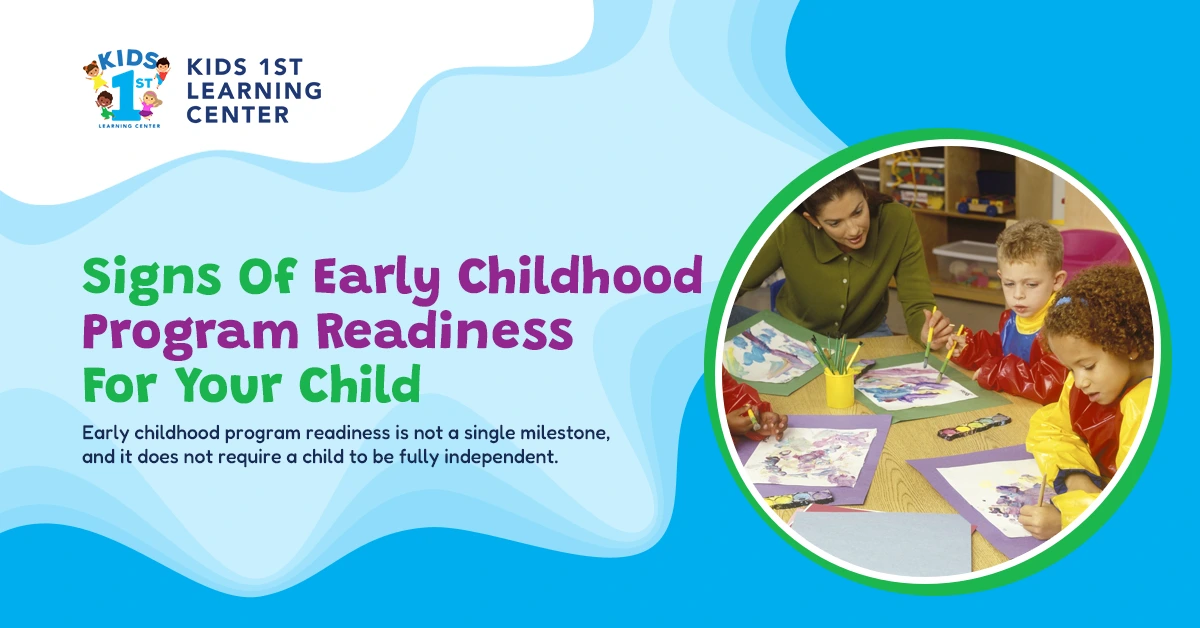
Early childhood program readiness is not a single milestone, and it does not require a child to be fully independent. Most children develop skills as they progress, especially when teachers and families work together. The most helpful approach is to look for signs that your child can benefit from a consistent routine, gentle structure, and guided social learning.
Comfortable With Short Separations
Many children feel uncertain at first, but some ability to separate from a parent or caregiver, even briefly, is a strong indicator. If your child can stay with another trusted adult for short periods, they are often more prepared for the transition.
Positive signs may include:
- Calms with reassurance from another adult
- Can focus on play after an initial goodbye
- Adjusts more easily when separation routines are consistent
Beginning Social And Communication Skills
Your child does not need advanced language skills to start. What matters most is a developing ability to express basic needs and respond to simple guidance. Early education can strengthen communication quickly through daily modeling and peer interaction.
Look for growing skills such as:
- Uses words, gestures, or sounds to request help
- Understands simple directions like “come here” or “clean up”
- Shows curiosity about other children, even through parallel play
Able To Follow Simple Routines With Help
Group care involves predictable routines, including meals, handwashing, outdoor time, and rest. If your child can participate with support, they are likely ready to benefit from classroom structure.
Readiness indicators may include:
- Tolerates waiting briefly with adult guidance
- Transitions to a new activity with support
- Uses comfort items appropriately when needed
Interest In Exploring And Learning
Children who are ready for early education often show curiosity about new spaces, materials, and activities. They may enjoy books, sensory play, music, building toys, or pretend play. This interest supports engagement during the day and makes classroom experiences more meaningful.
When Extra Support May Help
If your child has intense separation anxiety, frequent aggressive behavior, or difficulty with sensory stimulation, enrollment can still be successful, but it may require a more gradual transition plan. Ask the program how they support children who need additional time to adjust.
Recognizing early childhood program readiness can help you choose a start time that feels appropriate and supportive for your child’s development and comfort.
Understanding Curriculum And Daily Learning Routines
A quality early childhood curriculum supports the whole child, not only academics. It should build language and early literacy skills, strengthen problem-solving, and support social-emotional development through play, exploration, and guided practice. Look for a program that can explain what children are learning and how activities align with each age group’s developmental needs.
Key areas to look for:
- Early language, vocabulary, and pre-reading skills
- Fine and gross motor development
- Early math concepts like counting, sorting, and patterns
- Social skills such as sharing, listening, and cooperation
What Daily Routines Tell You About Program Quality
Daily routines shape how children feel in a classroom. A well-run program follows a predictable schedule that balances active play with calm moments, helping children build confidence and independence over time. During a tour, ask to see a sample daily schedule and observe how teachers guide transitions.
A balanced routine often includes:
- Arrival and morning transition support
- Learning centers or small-group activities
- Outdoor play and movement
- Meals, rest time, and quiet activities
- Closing circle or end-of-day reflection
How Progress Is Supported And Shared
A strong program monitors development through observation and age-appropriate assessments. Families should receive regular updates that include learning highlights and practical notes about how a child is adjusting. Consistent communication helps you understand what is happening each day and how your child is growing over time.
Understanding curriculum and daily learning routines helps you choose a program that offers structure, purpose, and a supportive setting where your child can thrive.
Conclusion
Enrolling in an early childhood education program is a meaningful step for your child and your family. When you understand enrollment requirements, ask focused questions, and evaluate readiness with a balanced perspective, you can decide with confidence. The best programs support learning through age-appropriate routines, positive guidance, and consistent communication, while also respecting each child’s needs. By comparing policies, curriculum, safety practices, and family support, you can choose a setting that helps your child feel secure, engaged, and prepared for continued growth.
Ready to take the next step with Kids 1st? Call (818) 873-0133 or reach out here: https://kids1st.org/contact-kids-1st/.