
How to choose a preschool program for enrollment is one of the most important decisions a parent can make during the early years. The right program supports your child’s growth in language, social skills, independence, and confidence while providing a safe and nurturing environment. With so many options available, it helps to know what to look for beyond location and cost.
From daily routines and learning approach to teacher qualifications and classroom culture, each detail plays a role in your child’s experience. This guide will help you examine key factors so you can feel informed, prepared, and confident as you choose the best preschool program for enrollment.
What To Look For In A Preschool Program Before You Decide
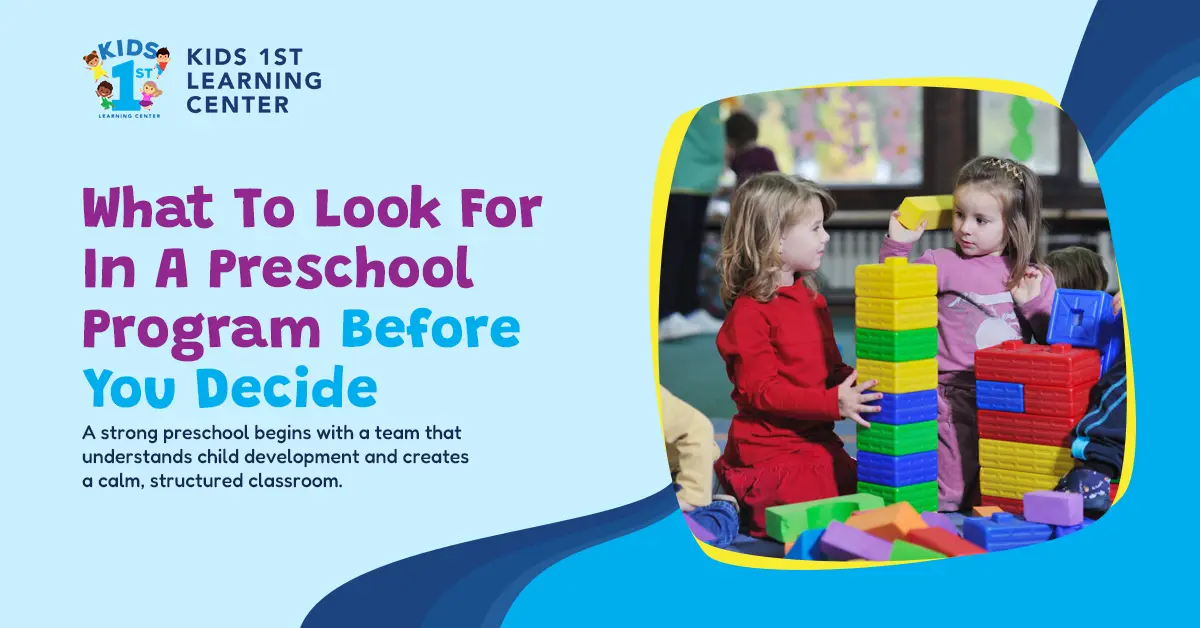
A strong preschool begins with a team that understands child development and creates a calm, structured classroom. Look for teachers who are trained in early childhood education, use positive guidance, and communicate clearly with both children and parents. Consistent staffing, supportive leadership, and well-organized classrooms are also strong indicators of quality.
Daily Routine, Learning Style, And Age-Appropriate Activities
Young children thrive when each day feels predictable, engaging, and balanced. Ask how the program structures the day and how learning happens throughout routines, play, and small-group instruction. A high-quality preschool program should include:
- Hands-on learning through play and exploration
- Early literacy and language-building activities
- Music, movement, art, and sensory experiences
- Opportunities for choice, creativity, and independence
The goal is not to rush academics, but to build strong foundational skills in a way that feels natural for this age.
Child Safety, Supervision, And Cleanliness Standards
Safety should be visible throughout the environment. Observe whether classrooms are secure, staff members are attentive, and children are supervised during transitions, outdoor time, and meals. Clean spaces, clear illness policies, and consistent sanitation routines help protect children and support healthy learning.
When touring, look for details such as:
- Secure entry procedures and sign-in protocols
- Safe sleep and diapering practices for younger classrooms
- Child-friendly materials that are kept organized and accessible
- Clear emergency and allergy awareness procedures
Social-Emotional Development And Behavior Guidance
Preschool is where children learn how to function in a group, express feelings appropriately, and build friendships. Ask how teachers help children manage conflicts, practice patience, and develop empathy. The best programs use guidance strategies that teach children what to do, rather than focusing only on what not to do.
A supportive approach typically includes:
- Helping children use words to solve problems
- Teaching routines that encourage independence
- Encouraging kindness, cooperation, and respect
- Building confidence through positive reinforcement
When these key areas are consistently supported, children are more likely to feel safe, capable, and ready to grow.
How To Compare The Best Preschool Program Near Me
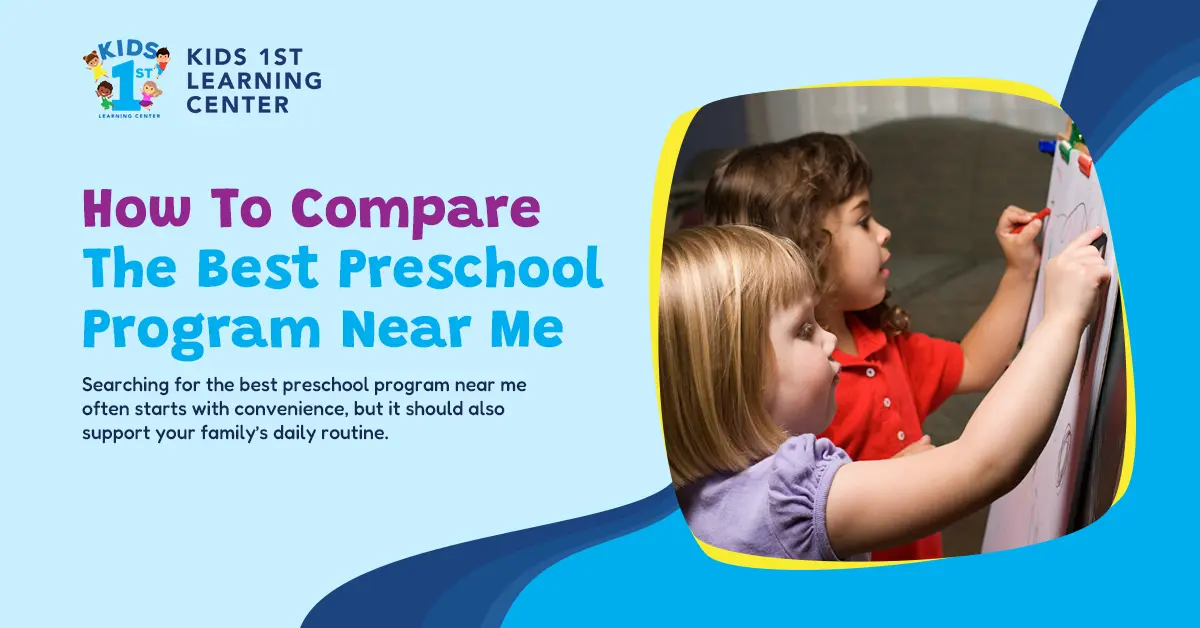
Searching for the best preschool program near me often starts with convenience, but it should also support your family’s daily routine. Consider how close the school is to home or work, how drop-off and pick-up flow, and whether the schedule matches your needs. A well-run preschool will have clear procedures that make busy mornings easier and help children transition smoothly into the day.
When comparing options, review practical details like:
- Hours of operation and part-time versus full-time choices
- Late pick-up policies and flexibility for working families
- Parking, car line procedures, and campus entry guidelines
- Any transportation support or nearby accessibility
Class Size, Ratios, And Individual Attention
Class size and teacher-to-child ratios influence your child’s experience every day. Smaller groups often allow for more support, stronger relationships, and better supervision. Ask how many children are in each classroom and how staff coverage works during transitions, outdoor time, and breaks. A strong program should offer a consistent structure while still noticing each child’s progress and needs.
Look for signs of individualized care, such as:
- Teachers who know children by name and respond calmly
- Meaningful small-group learning opportunities
- Support for social-emotional development and self-help skills
- Regular observations and age-appropriate goal setting
Campus Environment, Outdoor Play, And Learning Spaces
A quality preschool environment should feel safe, clean, and designed for learning through exploration. Take note of how classrooms are organized and whether children can access materials independently. Outdoor areas matter just as much, since movement and play help build confidence, coordination, and focus.
During a tour, observe:
- Classroom layout, safety gates, and secure entry points
- Learning centers for art, reading, pretend play, and sensory activities
- Daily outdoor time and age-appropriate playground features
- Cleanliness routines and visible safety practices
Family Communication And Parent Involvement
Strong communication builds trust and helps families feel connected. Ask how updates are shared, how concerns are handled, and how teachers keep parents informed about milestones and classroom routines.
Helpful communication practices include:
- Daily updates on meals, naps, and activities
- Photo sharing and classroom notes
- Regular progress check-ins and conferences
- Easy ways to reach staff with questions when needed
The best programs value partnership and provide clear, respectful communication that supports consistency between home and school.
Checking Preschool Enrollment Availability And Next Steps
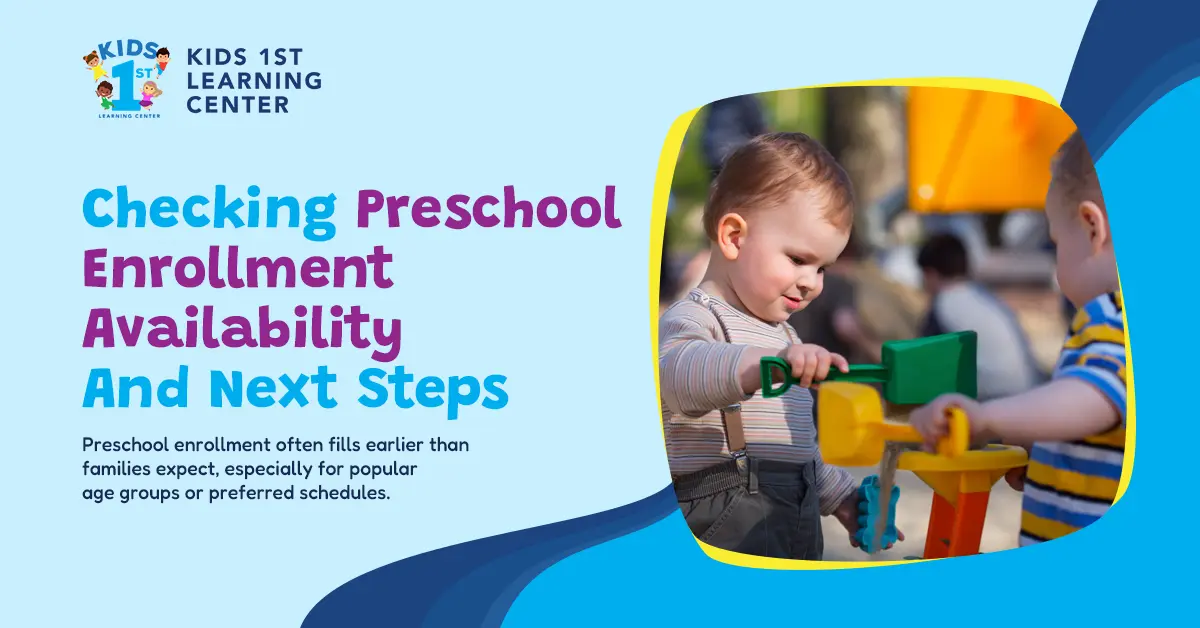
Preschool enrollment often fills earlier than families expect, especially for popular age groups or preferred schedules. Starting your search several months in advance gives you time to tour programs, compare options, and understand the enrollment process without feeling rushed. If your child will be starting in the fall, many families begin looking in late winter or early spring. For mid-year starts, it helps to check in regularly since openings can change quickly.
Waitlists, Openings, And Enrollment Timelines
Preschool enrollment availability depends on classroom capacity, staffing, and the number of families continuing from the previous year. Some schools offer rolling enrollment, while others enroll primarily at certain times of year. Ask whether the program has an active waitlist and how it is managed. It is also helpful to confirm how long openings typically take and whether part-time schedules have different availability than full-time options.
Essential questions to ask include:
- Are there current openings for my child’s age group?
- How does the waitlist work, and how often is it updated?
- What start dates are available if a space opens soon?
- Is there a registration deadline for priority enrollment?
Tour Questions That Reveal The Right Fit
A tour is your chance to go beyond what you see on a website. Pay attention to how staff interact with children, how classroom routines flow, and whether the environment feels calm and organized. Prepare a short list of questions that help you understand what your child’s day will look like and how the program supports growth.
Consider asking:
- How do teachers handle challenging behaviors and emotional needs?
- What does a typical daily schedule look like?
- How do you communicate with families throughout the week?
- What goals do children work toward before kindergarten?
What To Bring And Ask During A Preschool Visit
Being prepared makes the visit more productive. Bring a notepad or use your phone to track details, and come ready to discuss your child’s age, personality, and any support needs. Many programs also provide enrollment packets during tours, so plan to review them carefully afterward.
Before leaving, confirm next steps such as:
- Enrollment forms and required documents
- Registration fees and tuition details
- Health and immunization requirements
- Timeline for acceptance and classroom placement
With a clear plan and the right questions, you can move forward with assurance and avoid enrollment delays.
Understanding Curriculum And Kindergarten Readiness Support
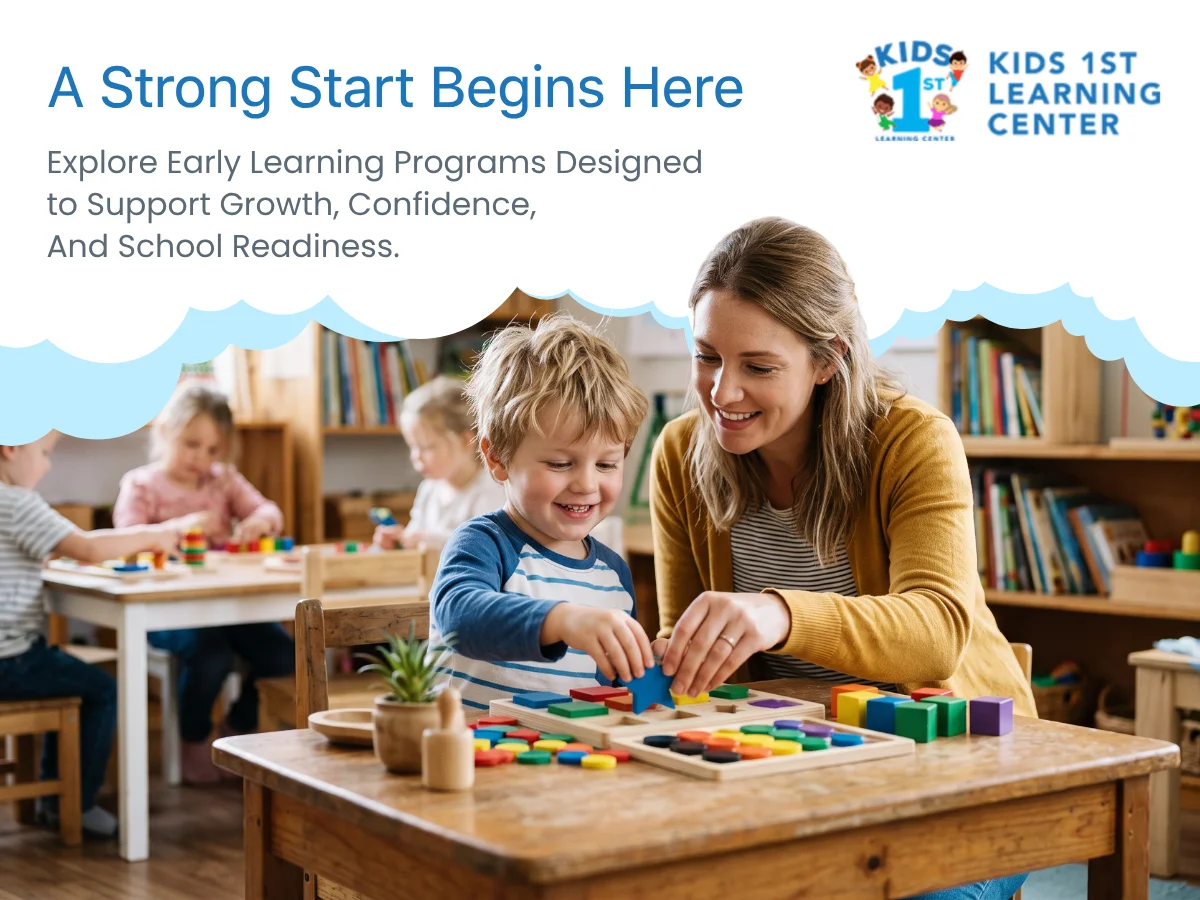
A strong preschool curriculum supports early academic foundations without turning the classroom into a formal school day. Look for activities that introduce letters, sounds, counting, patterns, and early problem-solving in ways that feel natural and engaging. Children should learn through hands-on experiences, stories, conversation, and play-based exploration that build understanding over time.
Quality preschool instruction often includes:
- Daily read-alouds and classroom discussions
- Letter recognition, rhyming, and vocabulary development
- Counting games, sorting, and simple measuring activities
- Puzzles and hands-on materials that build reasoning skills
Hands-On Learning Through Play And Exploration
Play is one of the most effective ways young children learn. A well-designed program uses play as a meaningful learning tool, not just a break between lessons. Through pretend play, sensory activities, building, art, and music, children practice cooperation, creativity, and thinking skills while staying engaged.
Look for classrooms that offer:
- Centers for dramatic play, blocks, art, and fine motor practice
- Sensory activities that support focus and self-regulation
- STEM-style exploration through simple experiments and questions
- Guided play led by teachers who encourage learning through curiosity
Building Independence And Classroom Confidence
Kindergarten readiness is not only about knowing letters and numbers. Children also need the confidence to participate in group settings, follow routines, and manage simple tasks independently. A strong preschool program supports independence by giving children consistent opportunities to practice daily routines in a safe and encouraging environment.
Independence skills may include:
- Washing hands, cleaning up materials, and managing belongings
- Following one-step and multi-step directions
- Taking turns, waiting patiently, and transitioning between activities
- Participating in group time with appropriate attention and behavior
Supporting Developmental Milestones By Age
Every child develops at their own pace, and preschool programs should reflect that. A supportive curriculum recognizes growth across multiple areas, including social-emotional skills, language development, motor skills, and cognitive learning. Teachers should understand what is age-appropriate and adjust expectations based on each child’s progress.
When evaluating kindergarten readiness support, consider whether the program:
- Tracks progress through regular observation and documentation
- Communicates developmental milestones with families clearly
- Provides extra support when children need guidance or structure
- Encourages growth without pressure or unrealistic expectations
A balanced curriculum helps children build skills steadily while feeling capable, safe, and prepared for the transition into kindergarten.
Conclusion
Choosing the right preschool is a decision that shapes more than your child’s daily routine, since it influences confidence, early learning habits, friendships, and kindergarten readiness. By focusing on teacher quality, classroom environment, curriculum support, and enrollment timelines, you can narrow your options and select a program that truly matches your child’s needs. The best preschool experience is one where your child feels safe, motivated, and excited to learn each day, while you feel informed, supported, and confident in your choice.
To learn more about preschool enrollment and schedule a tour, contact Kids 1st at (818) 873-0133 or visit https://kids1st.org/contact-kids-1st/.